A Customer Data Platform (CDP) creates a single customer view by collecting data from every touchpoint a customer has with your brand, resolving duplicate records into one unified profile, and making that profile available in real time across your marketing stack. The result is a persistent, addressable record of each individual, built from behavioural, transactional, and demographic data combined.
For marketers managing high volumes of customer interactions across email, SMS, web, and beyond, this unified profile is the foundation for every personalised experience you deliver. The sections below unpack exactly how that process works, from raw data ingestion to real-world campaign impact.
What data sources does a CDP pull together?
A CDP ingests data from every channel and system where a customer interaction occurs. This includes your website, mobile app, email platform, CRM, point-of-sale system, loyalty programme, paid media, and offline touchpoints. The CDP connects these sources through APIs, native integrations, and data imports to build a continuous, cross-channel data stream for each customer.
The data itself falls into three broad categories:
- Behavioural data: Page views, product clicks, email opens, app sessions, and purchase history
- Transactional data: Order values, frequency, recency, returns, and loyalty points
- Demographic and declared data: Name, location, preferences, and consent records
What separates a CDP from a simple data warehouse is that it does not just store this data. It continuously processes and updates each customer profile as new events arrive, so the view you act on is always current. A customer who browses a new product category at 9am can receive a relevant recommendation by 9.05am, because the CDP has already updated their profile in real time.
How does a CDP match and merge duplicate customer records?
A CDP uses a process called identity resolution to match and merge duplicate records. It links identifiers such as email addresses, device IDs, loyalty numbers, and cookie data to determine when multiple records belong to the same individual. Once matched, those records are merged into a single, persistent customer profile without deleting the source data.
Identity resolution typically works in two stages:
- Deterministic matching: Direct matches on known identifiers, such as the same email address appearing in your CRM and your email platform
- Probabilistic matching: Pattern-based inference, such as the same device browsing the same account across two different sessions
For high-volume B2C brands, this matters enormously. A retail customer might interact with your brand as a guest checkout user, a loyalty member, an email subscriber, and an app user, all simultaneously. Without identity resolution, you have four separate records. With a CDP, you have one accurate profile, and every campaign you send reflects the complete picture of that relationship.
What does a single customer view actually look like?
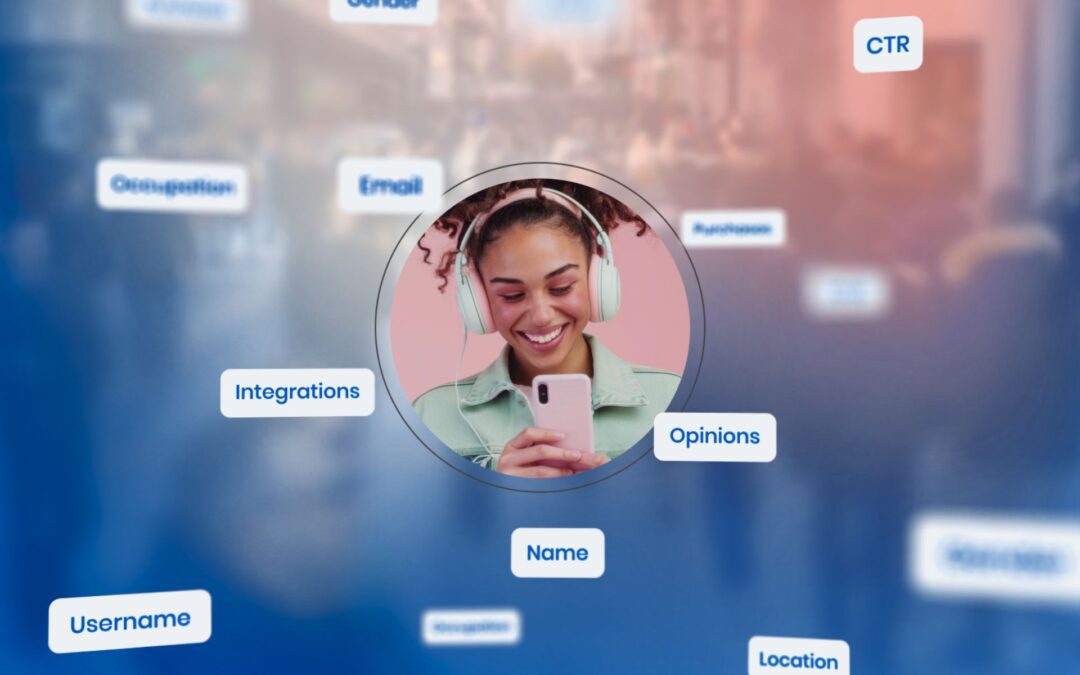
A single customer view is a unified profile that consolidates everything you know about one individual into a single, accessible record. It typically includes contact details, consent status, channel preferences, purchase history, browsing behaviour, lifetime value, segment memberships, and recent engagement signals, all updated in real time.
In practice, a marketer looking at a single customer view might see that a specific customer last purchased three weeks ago, has a high average order value, browsed two product categories this morning, and has not opened the last two emails. That combination of signals immediately suggests a re-engagement trigger with a product recommendation, rather than another generic newsletter.
The 360 customer view is not just a reporting dashboard. It is an operational asset. The profiles it generates feed directly into segmentation logic, journey triggers, and personalisation rules, so the insight is immediately actionable rather than sitting in a report that someone has to interpret manually.
How is a CDP different from a CRM or a DMP?
The key distinction in the customer data platform vs CRM comparison is scope and real-time capability. A CRM manages known customer relationships, primarily sales interactions, contact records, and service history. A CDP captures the full behavioural picture across anonymous and known users, in real time, and makes those profiles available for automated marketing activation.
CDP vs CRM
A CRM is built for managing relationships at the account or contact level, typically updated manually or through sales workflows. It is excellent for pipeline management and customer service. A CDP is built for marketing activation at scale. It ingests event-level behavioural data automatically, resolves identities across channels, and feeds segments directly into campaign execution.
CDP vs DMP
A Data Management Platform (DMP) is designed for anonymous, third-party audience targeting, primarily for paid media. DMP profiles are short-lived and cookie-based. CDP profiles are persistent, first-party, and identity-resolved. As third-party cookies continue to be phased out, DMPs lose their utility, while CDPs become more valuable because they are built on data your brand owns directly.
In short: use a CRM to manage relationships, a CDP to understand and activate your full customer base, and treat the DMP as a legacy tool with a shrinking role in a first-party data world.
How does a single customer view improve personalisation?
A single customer view improves personalisation by giving your marketing platform accurate, complete, and current data to act on. Without it, personalisation relies on fragmented signals from individual channels, which leads to repeated messages, missed triggers, and irrelevant content. With a unified profile, every campaign decision is based on the full customer context.
Consider a travel brand running a post-booking email sequence. Without a single customer view, the email platform might not know the customer also browsed upgrade options on the website or called customer service about luggage allowances. With a CDP feeding a unified profile, the next email can reference the specific destination, suggest a relevant upgrade, and skip the luggage FAQ because the service team has already answered it.
Intelligent modelling built on top of unified profiles takes this further. RFM scoring (Recency, Frequency, Monetary value) identifies your highest-value customers and those at risk of lapsing. Next-best-offer models predict which product or message is most likely to convert for each individual. Predictive lifecycle insights flag when a customer is approaching a natural repurchase window. All of these models depend on a clean, complete single customer view to produce reliable outputs.
When should a brand invest in a CDP?
A brand should invest in a CDP when fragmented data is actively limiting its marketing performance. Common signals include: customer data sitting in three or more disconnected systems, personalisation that relies on single-channel behaviour only, manual data exports to run segmentation, and an inability to trigger campaigns based on real-time customer actions.
For most B2C brands in retail, travel, finance, or entertainment, that threshold arrives earlier than expected. Once your customer base grows beyond a size where manual segmentation is practical, and once you are running campaigns across more than two channels, the cost of not having unified data becomes measurable in missed revenue, poor customer experience, and wasted spend.
The right moment to invest is before data fragmentation becomes a crisis. Brands that wait until their CRM, email platform, and ecommerce system are completely out of sync face a much longer and more expensive unification project. Starting the CDP conversation when you are scaling, rather than when you are already struggling, gives your team the foundation to grow into more sophisticated personalisation without rebuilding from scratch.
How Deployteq powers your single customer view
We built our Customer Data Platform to give marketing teams a complete, real-time view of every customer without needing a data science team to operate it. Here is what that looks like in practice:
- Unified customer profiles: All your data sources connected into one persistent, identity-resolved profile per customer
- Intelligent modelling built in: RFM scoring, next-best-offer, and predictive lifecycle insights available directly within your campaigns
- Real-time activation: Profiles feed directly into email, SMS, WhatsApp, push, and web campaigns without manual exports
- Visual journey builder: Design cross-channel journeys that respond to live customer behaviour, not yesterday’s data
- Smart segmentation: Build hyper-personalised segments based on the full customer picture, not just one channel’s data
Whether you are a retail brand trying to recover lapsing customers, a travel operator personalising post-booking sequences, or a finance brand building trust through timely, relevant communication, a complete 360 customer view is what makes the difference between campaigns that feel generic and experiences that feel genuinely personal. Book a demo and see how our CDP works with your existing stack.