Yes, your marketing data is almost certainly holding back your personalisation strategy. Disconnected marketing data is one of the most common barriers to delivering relevant, timely experiences at scale. When customer information sits in separate systems that cannot talk to each other, marketers are left working with incomplete profiles, outdated segments, and campaigns that miss the mark.
This affects brands across every sector, from retail and travel to finance and entertainment. The good news is that the problem is fixable once you know where the gaps are and what to do about them. Here is what every question-driven marketer needs to understand.
What kinds of data gaps actually block personalisation?
The data gaps that most commonly block personalisation are fragmented customer profiles, missing behavioural signals, and siloed channel data. When purchase history lives in your ecommerce platform, email engagement sits in your ESP, and web behaviour stays in your analytics tool, you cannot build a complete picture of any individual customer. Without that picture, personalisation is guesswork.
Specifically, these are the gaps that cause the most damage:
- Identity fragmentation: The same customer has different IDs across different systems, making it impossible to stitch their journey together.
- Missing intent signals: Browsing behaviour, abandoned sessions, and product views never reach your campaign tools.
- Stale data: Segments built on last quarter’s purchase data do not reflect where a customer is in their lifecycle today.
- Channel blind spots: You know what someone opened in email but not what they searched for on your website that same morning.
Each of these gaps creates a ceiling on how deeply you can personalise. You can only act on data you actually have, in a format you can actually use.
How does poor data quality affect campaign performance?
Poor data quality directly reduces campaign performance by causing irrelevant messaging, poor timing, and wasted budget. When your segments are built on incomplete or inaccurate data, you send the wrong offer to the wrong person at the wrong moment. That drives up unsubscribes, suppresses conversion rates, and erodes customer trust over time.
The impact is measurable across every metric that matters. Deliverability suffers when you are mailing lapsed customers flagged as active. Click-through rates drop when product recommendations do not reflect real preferences. Revenue per send falls when lifecycle triggers fire at the wrong stage of the customer journey.
For high-volume B2C marketers, the compounding effect is significant. A retail brand sending millions of emails per month with even a modest mismatch between data and reality is leaving a substantial portion of that volume working against the brand rather than for it.
What is a Customer Data Platform and how does it fix this?
A Customer Data Platform is a centralised system that unifies customer data from every source into a single, persistent profile that can be activated directly in marketing campaigns. Unlike a CRM or a data warehouse, a marketing CDP is built specifically for marketers, making that unified data immediately usable for segmentation, targeting, and personalisation without needing a data team to extract and transform it first.
A CDP fixes disconnected marketing data by resolving identity across systems, ingesting behavioural and transactional signals in real time, and making the full customer profile available at the point of campaign execution. The result is that your segments reflect actual customer behaviour rather than what one channel happened to record.
The practical difference between CDP vs marketing automation alone is significant. Marketing automation tools are excellent at executing journeys, but they depend on the quality of the data fed into them. A CDP ensures that data is clean, unified, and enriched before it reaches your automation layer, which means every trigger, segment, and recommendation is working from a complete picture rather than a partial one.
How does segmentation quality determine personalisation depth?
Segmentation quality is the direct ceiling on how deep your personalisation can go. You can only personalise as precisely as your segments allow. Broad, static segments produce broad, generic messaging. Granular, real-time segments built on unified behavioural data produce genuinely relevant experiences that feel tailored to the individual.
The difference between basic and advanced segmentation comes down to the inputs available. When your marketing automation platform has access to RFM scores, predictive next-best-offer models, and lifecycle stage data, you can build segments that reflect actual customer intent. When it only has email engagement data, you are limited to broad behavioural buckets.
Consider a travel brand. A basic segment might be “customers who booked in the last 12 months.” A high-quality segment might be “customers with high RFM scores who browsed long-haul destinations in the last 14 days but have not yet converted for the upcoming peak booking window.” The second segment enables a completely different level of personalisation, and the only thing separating them is data quality.
What data sources should feed a personalisation strategy?
A robust personalisation strategy should draw from transactional data, behavioural data, declared preference data, and real-time engagement signals. Relying on any single source creates blind spots that limit how accurately you can model customer intent and lifecycle stage.
The most valuable data sources to connect include:
- Transactional history: Purchase frequency, order value, product categories, and recency, the foundation of RFM modelling.
- Web and app behaviour: Pages visited, products viewed, search queries, and session patterns that signal intent before a purchase decision is made.
- Email and channel engagement: Opens, clicks, and conversion paths across email, SMS, push, and web.
- CRM and loyalty data: Membership tier, preferences, and service interactions that add context to the commercial relationship.
- Declared data: Preferences and interests captured through forms, preference centres, or onboarding flows.
The goal is not to collect everything indiscriminately. It is to ensure that the data sources most relevant to your customer lifecycle are unified and accessible at the point of activation.
How do you know if your data is ready for personalisation at scale?
Your data is ready for personalisation at scale when you can answer three questions with confidence: Do you have a single, unified profile for each customer? Can you segment in real time based on recent behaviour? And can those segments activate directly in campaigns without manual data preparation? If any of those answers is no, your data is not yet ready.
A practical readiness check looks like this:
- Identity resolution: Can you match a customer across email, web, app, and in-store touchpoints without manual reconciliation?
- Data freshness: Are your segments updated based on behaviour from the last 24 to 48 hours, or are they running on weekly batch exports?
- Activation speed: Can a behavioural trigger, such as a high-value browse session, fire a personalised campaign within minutes?
- Profile completeness: What percentage of your active customers have enough data points to support meaningful personalisation beyond first name and last purchase?
Most brands discover that identity resolution and data freshness are the two areas that need the most attention. Solving those two unlocks significant personalisation capability without requiring a complete technology overhaul.
How Deployteq helps you turn disconnected data into real personalisation
We built our Customer Data Platform specifically to solve the data readiness problem for B2C marketers who need to act fast and personalise at scale. Here is what it enables:
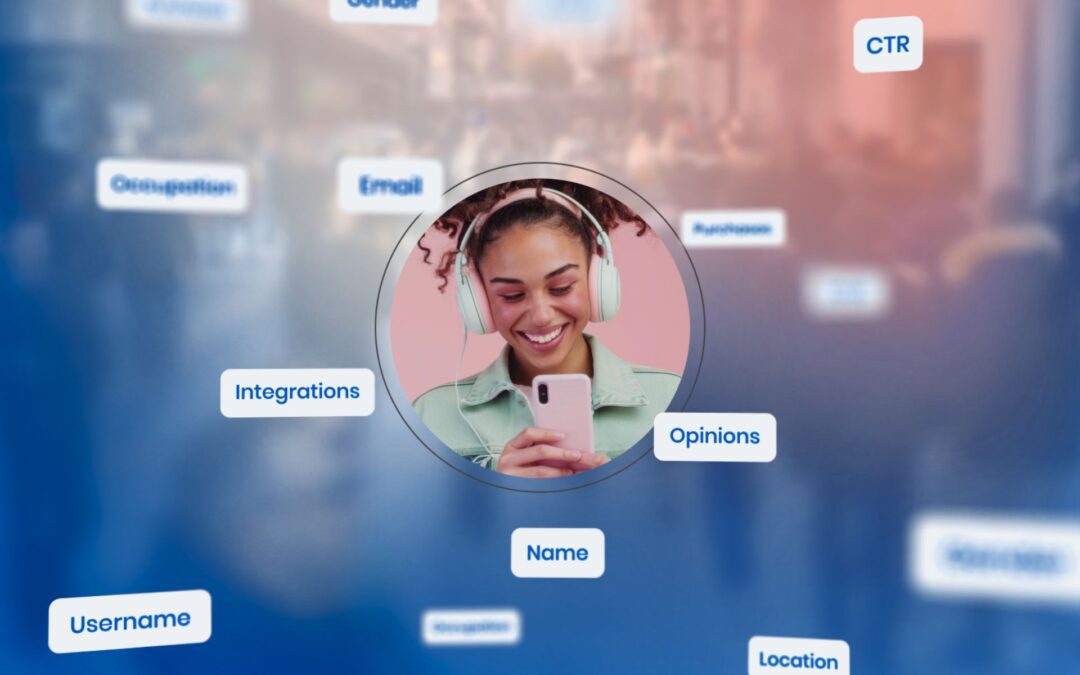
- Unified customer profiles: All your data sources, from transactional and behavioural to CRM and channel engagement, are connected into a single 360-degree customer view.
- Intelligent modelling built in: RFM scoring, next-best-offer recommendations, and predictive lifecycle insights are available directly within your campaign builder, with no data science team required.
- Real-time segmentation: Build and activate hyper-personalised segments based on live behaviour across email, SMS, WhatsApp, push, and web.
- Direct campaign activation: The CDP connects seamlessly to your Deployteq campaigns, so the gap between insight and execution disappears.
- Website personalisation: Serve content that adapts to each visitor based on their profile, behaviour, and predicted intent.
If your current setup means your marketing data is not actionable at the speed your customers expect, it is worth seeing what a purpose-built marketing CDP can do. Book a self-guided demo and see how unified data changes what personalisation actually looks like in practice.