No, a CDP cannot replace your marketing automation platform. A Customer Data Platform unifies and enriches customer data, but it does not execute campaigns on its own. Marketing automation handles the sending, sequencing, and channel delivery that turns data into actual customer interactions. The two tools solve different problems, and the most effective setups use them together.
The confusion is understandable. As CDPs have grown more sophisticated, their feature sets have started to overlap with automation tools in some areas. Below, we unpack exactly where the lines are drawn and what to look for if you want both capabilities working as one.
What does a CDP actually do that a marketing automation platform doesn’t?
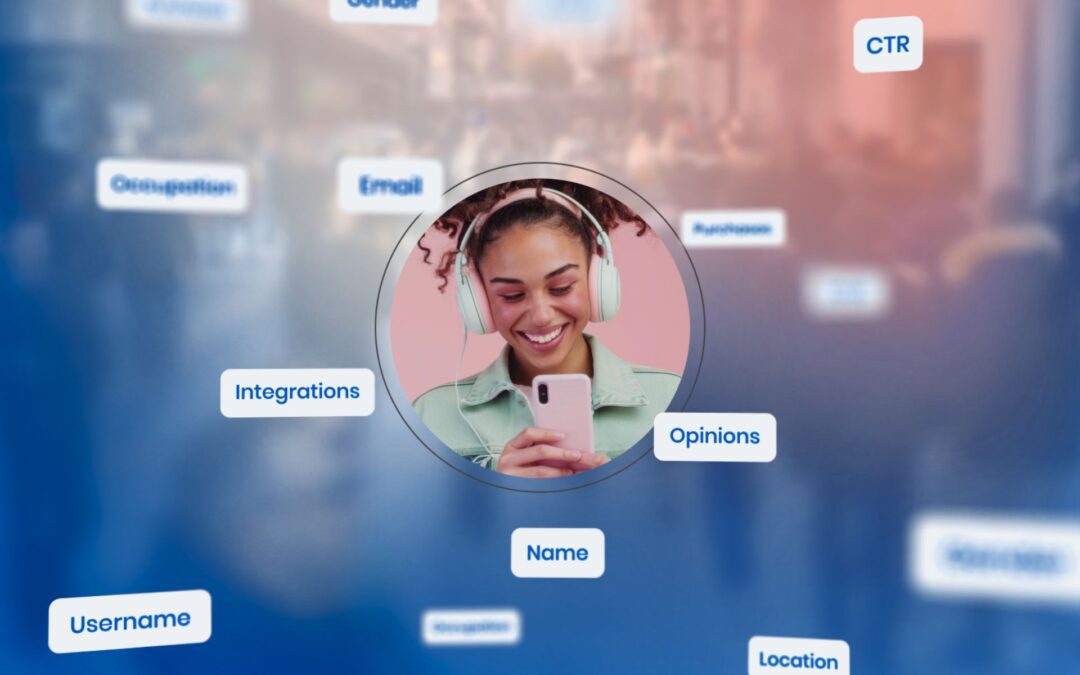
A CDP collects, unifies, and enriches customer data from every source into a single, persistent customer profile. Where a marketing automation platform focuses on executing campaigns across channels, a CDP focuses on making your data trustworthy, complete, and actionable before any campaign fires. It resolves identities, eliminates duplicates, and builds a 360-degree view of each customer across all touchpoints.
In practice, this means a CDP can ingest data from your website, CRM, point-of-sale, loyalty programme, and mobile app and stitch it all together into one profile. Your marketing automation platform then uses that profile to decide who gets which message and when.
Where marketing automation platforms typically manage segments, journeys, and sends, a CDP handles the upstream work:
- Identity resolution: Matching anonymous visitors to known customers across devices and sessions
- Data unification: Pulling together disconnected marketing data from siloed systems
- Predictive modelling: Running models like RFM scoring, next-best-offer, and lifecycle stage predictions
- Audience building: Creating rich, real-time segments that can be pushed downstream to execution tools
Without a CDP, your marketing automation platform is only as smart as the data it can see. With one, every segment and trigger is built on a complete picture of the customer.
Can a CDP send emails, SMS, and push notifications on its own?
Most CDPs cannot send emails, SMS, or push notifications independently. A CDP is a data layer, not a delivery engine. It can define who should receive a message and when the conditions are met, but it relies on a connected marketing automation or campaign management platform to actually deliver that communication across channels.
Some enterprise CDPs include basic activation features, but these are rarely a match for the journey-building, template design, deliverability management, and channel orchestration that a dedicated marketing automation platform provides. If your marketing data is not actionable at the point of send, the CDP alone will not fix that.
Think of it this way: a CDP tells you that a customer has lapsed after three purchases, has a high predicted LTV, and last browsed a specific product category. Your marketing automation platform takes that signal and fires a personalised email, an SMS follow-up 48 hours later, and a push notification if the app is installed. Neither tool does the full job without the other.
What are the risks of replacing your marketing automation platform with a CDP?
Replacing your marketing automation platform with a CDP creates serious gaps in your ability to execute campaigns. You lose journey orchestration, channel delivery, template management, A/B testing, and send-time optimisation. The result is richer data with no reliable way to activate it, which is arguably worse than the disconnected marketing data problem you were trying to solve.
Beyond execution gaps, there are practical risks worth considering:
- Loss of deliverability infrastructure: Email deliverability depends on reputation management, bounce handling, and suppression logic that CDPs do not manage
- No native channel support: SMS, WhatsApp, push, and in-app messaging require dedicated sending infrastructure that sits outside a CDP’s scope
- Broken customer journeys: Triggered sequences, re-engagement flows, and lifecycle programmes depend on automation logic that a CDP does not provide
- Increased complexity: Without a unified platform, you end up stitching together multiple point solutions, which often recreates the disconnected marketing data problem you started with
The short version: a CDP makes your data smarter, but without marketing automation, that intelligence has nowhere to go.
When does it make sense to use a CDP alongside marketing automation?
It makes sense to add a CDP when your marketing automation platform is working with incomplete or fragmented customer data. If your segments are shallow, your personalisation is limited to basic merge tags, or you cannot connect offline behaviour to online campaigns, a CDP closes those gaps by feeding richer, unified profiles into your existing automation workflows.
Specific scenarios where a CDP alongside marketing automation adds real value include:
- High-volume retail or e-commerce: Where purchase history, browse behaviour, and loyalty data live in separate systems and need unifying for cart recovery or reactivation campaigns
- Travel and hospitality: Where booking data, in-destination behaviour, and loyalty status need to combine for personalised post-trip or rebooking sequences
- Finance and insurance: Where complex product lifecycles and compliance requirements demand precise, data-driven segmentation before any communication fires
- Brands with large anonymous visitor pools: Where identity resolution can dramatically increase the size of actionable, known audiences
If your current platform already handles segmentation well and your data sources are relatively clean and connected, a standalone CDP may add more complexity than value. The case becomes compelling when your marketing CDP investment is driven by a genuine data unification need, not just a feature checklist.
What should you look for in a platform that combines CDP and marketing automation?
Look for a platform where the CDP and marketing automation share a single data layer, so audience insights activate directly into campaigns without API dependencies or data syncing delays. The key capability is native activation: the ability to move from a unified customer profile to a live, personalised campaign across email, SMS, push, and web without leaving the platform.
Beyond native activation, the most important capabilities to evaluate are:
- Intelligent modelling built in: RFM scoring, next-best-offer, and predictive lifecycle insights should run within the platform, not require a separate data science team
- Real-time segmentation: Segments should update dynamically as customer behaviour changes, not on a nightly batch schedule
- Cross-channel journey building: The journey builder should use CDP-enriched profiles to personalise across every channel from one interface
- A single customer view: Every marketer on the team should be able to see the same complete profile, not a fragmented view depending on which tool they are in
The goal is to eliminate the gap between data and delivery. When your CDP and automation platform are the same system, your marketing data is not just unified, it is immediately actionable.
How Deployteq brings CDP and marketing automation together
We built our Customer Data Platform to sit natively inside the Deployteq marketing automation platform, so there is no gap between insight and activation. Here is what that looks like in practice:
- Unified customer profiles: All your customer data, from purchase history to web behaviour to loyalty status, consolidated into a single 360-degree view
- Intelligent modelling: RFM scoring, next-best-offer recommendations, and predictive lifecycle insights built directly into the platform
- Instant activation: Segments built in the CDP fire directly into email, SMS, WhatsApp, push, and web campaigns without any additional integration work
- Real-time segmentation: Audiences update dynamically as behaviour changes, so your campaigns always reflect the current state of each customer
- Website personalisation: CDP data powers on-site personalisation alongside your outbound channels, creating a consistent experience at every touchpoint
If your marketing data is not actionable right now, or if you are managing CDP vs marketing automation as two separate conversations, we can help you bring them together. Book a demo and see how Deployteq activates your data across every channel from one platform.