A customer data platform delivers a unified, real-time view of every customer by consolidating data from all your channels into a single, actionable profile. The core benefit is simple: when your data is connected, your marketing gets smarter. You can segment with precision, personalise at scale, and trigger the right message at exactly the right moment. Below, we unpack how a CDP works, what it replaces, and when it is the right move for your business.
How does a customer data platform actually work?
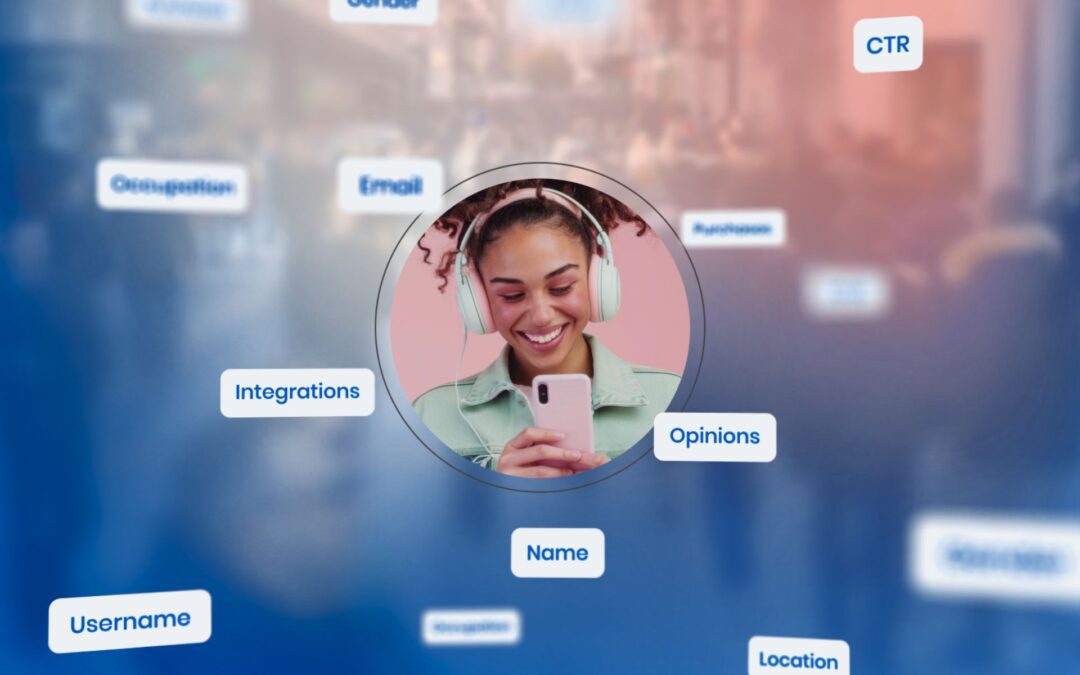
A customer data platform works by ingesting data from every touchpoint, including email, web, app, CRM, and transactional systems, and stitching it together into a persistent, unified customer profile. Unlike a data warehouse, a CDP is built for marketers. It resolves identities across devices and channels, so a single customer who browses on mobile, clicks an email, and buys in-store is recognised as one person, not three.
Once profiles are built, the CDP continuously enriches them in real time. Every new interaction updates the record. That live profile then feeds directly into your campaigns, automation workflows, and personalisation logic, so your messaging always reflects where a customer actually is in their lifecycle, not where they were last month.
The key components that make this work are:
- Data ingestion: Pulling in structured and unstructured data via APIs, integrations, and direct connectors.
- Identity resolution: Matching records across sources to create a single customer view.
- Profile enrichment: Layering behavioural, transactional, and demographic data onto each profile.
- Activation: Making those profiles immediately available for campaign targeting and personalisation.
What are the main benefits of a customer data platform?
The main benefits of a CDP platform are unified customer data, smarter segmentation, faster campaign activation, and the ability to deliver genuinely personalised experiences across every channel. Together, these capabilities close the gap between what customers expect and what most marketing stacks can actually deliver.
Here is what that looks like in practice:
- Single customer view: Every interaction, purchase, and preference lives in one profile. No more data silos, no more guesswork.
- Real-time activation: Trigger campaigns the moment a behaviour occurs, whether that is an abandoned browse, a loyalty milestone, or a lapsed purchase window.
- Hyper-personalised messaging: Serve product recommendations, offers, and content that reflect what each individual actually wants, not what your broadest segment might tolerate.
- Consistent cross-channel experience: Email, SMS, push, WhatsApp, and web all draw from the same profile, so your messaging is coherent wherever the customer shows up.
- Smarter spend: Better data means better targeting, which means less budget wasted on audiences who will not convert.
For sectors like travel, retail, and finance, where customer lifecycles are complex and the cost of getting messaging wrong is high, these benefits translate directly into revenue and retention.
How does a CDP improve customer segmentation?
A real-time customer data platform improves segmentation by replacing static, manually maintained lists with dynamic segments that update automatically as customer behaviour changes. Instead of segmenting on last month’s purchase data, you can build segments based on live signals: what someone browsed this morning, how recently they engaged, or how their predicted LTV compares to similar customers.
Advanced CDP platforms support intelligent modelling that takes segmentation further. RFM scoring, for example, groups customers by recency, frequency, and monetary value, giving you a clear picture of who your most valuable customers are and who is at risk of churning. Next-best-offer modelling goes a step further by predicting what a specific customer is most likely to respond to next, so you are not just sending the right message to the right segment, you are sending the right message to the right individual.
This matters most in high-volume environments. A retailer running seasonal campaigns, an airline managing booking windows, or a financial services brand navigating complex product lifecycles all benefit from segments that reflect reality rather than a snapshot from last quarter’s data export. Explore how unified customer profiles power smarter segmentation in practice.
What is the difference between a CDP, CRM, and DMP?
The key distinction is purpose and data type. A CRM manages known customer relationships, primarily sales interactions and contact records. A DMP (Data Management Platform) handles anonymous, cookie-based audience data for paid media targeting. A customer data platform unifies both known and behavioural data across all channels into persistent profiles built specifically for marketing activation.
CRM vs CDP
A CRM is built around managing relationships and sales pipelines. It stores contact details, interaction history, and deal stages. A CDP goes broader: it captures behavioural signals from your website, app, email, and transactional systems, and builds a richer, more dynamic profile that updates in real time. CRMs are contact records. CDPs are living customer profiles.
DMP vs CDP
A DMP is designed for third-party, anonymous audience data used in programmatic advertising. It is inherently temporary because it relies on cookies and does not build persistent profiles. A CDP, by contrast, works with first-party data and creates long-term profiles tied to real, identifiable customers. As third-party cookies become less reliable, the CDP has become a more durable and privacy-compliant foundation for data-driven marketing.
Who benefits most from using a customer data platform?
Businesses that benefit most from a CDP platform are those managing large, complex customer bases across multiple channels, where fragmented data is actively limiting their ability to personalise and automate. This typically means mid-to-large B2C brands in sectors like retail, travel, hospitality, entertainment, and financial services.
Within those organisations, the roles that feel the impact most directly are:
- CRM and email marketers who are tired of building segments manually from incomplete data.
- Marketing managers who need campaigns to react to customer behaviour in real time, not on a weekly batch cycle.
- CMOs who need a clear, defensible view of customer LTV and campaign performance across every channel.
If your team is spending significant time reconciling data from multiple sources before they can even begin building a campaign, that is a strong signal a CDP would change how you work. Learn more about how marketing automation connects with CDP capabilities to drive results at scale.
When should a business upgrade to a customer data platform?
A business should upgrade to a customer data platform when fragmented data is visibly limiting personalisation, campaign speed, or segmentation quality. If your team is manually stitching together data from your email platform, CRM, and ecommerce system before every send, you have already outgrown your current setup.
Specific signals that it is time to move:
- You cannot trigger campaigns based on real-time behaviour because your data is batched or siloed.
- Your segments are static and based on historical snapshots rather than live customer signals.
- You are running the same campaign across your entire database because you lack the data to personalise meaningfully.
- Your channels are disconnected, so a customer who just bought receives a promotional email for the same product.
- You are upgrading from a simpler platform like MailChimp or ActiveCampaign and need more sophisticated data handling.
In 2026, customer expectations for personalisation are higher than ever. Brands that are still working from fragmented data will find it increasingly difficult to compete with those who can react in real time and personalise at an individual level.
How Deployteq helps you activate your customer data
We built our Customer Data Platform to give marketing teams exactly this kind of control, without needing a data science team to run it. Our CDP unifies all your customer data into intelligent profiles and makes them immediately available for campaign activation across email, SMS, WhatsApp, push, and web.
Here is what that means in practice:
- 360-degree single customer view: Every interaction, across every channel, connected in one profile.
- Intelligent modelling built in: RFM scoring, next-best-offer recommendations, and predictive lifecycle insights available directly within your campaigns.
- Real-time segmentation: Build hyper-personalised segments that update automatically as customer behaviour changes.
- Direct campaign activation: No exports, no manual data prep. Your profiles feed straight into your journeys and automations.
- Cross-channel consistency: Every channel draws from the same profile, so your messaging is coherent and timely wherever your customer shows up.
Trusted by brands like Wickes, Virgin Media, and Center Parcs, we help marketing teams move from data chaos to data-driven results. If you are ready to see what a connected customer view looks like for your business, book a demo and we will show you exactly how it works.