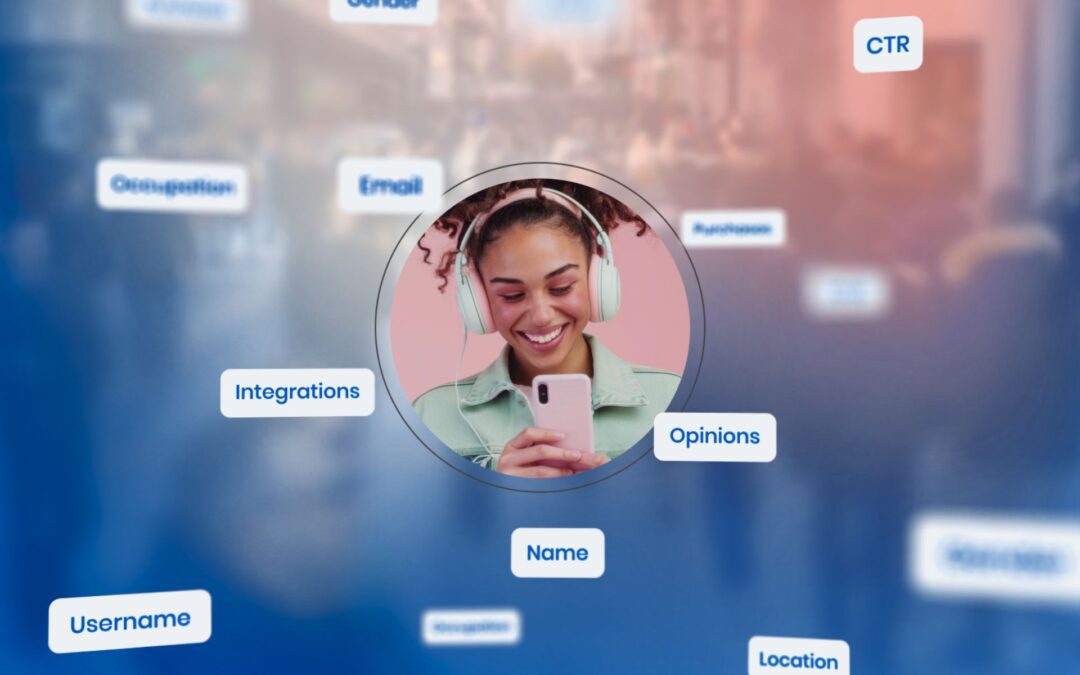
A customer data platform collects and unifies behavioural, transactional, demographic, and engagement data from every touchpoint a customer has with your brand. Unlike point solutions that store data in silos, a CDP pulls all of that information into a single, persistent customer profile that updates in real time. The sections below break down exactly what data goes in, where it comes from, and how a CDP handles it responsibly.
What types of data does a CDP store and manage?
A CDP stores four core categories of customer data: identity data (names, email addresses, device IDs), behavioural data (website visits, clicks, app interactions), transactional data (purchases, bookings, returns), and attitudinal data (survey responses, reviews, preferences). Together, these categories build a 360-degree single customer view that powers personalisation at scale.
Each category plays a distinct role in how marketers activate campaigns:
- Identity data resolves who the customer is across devices and channels.
- Behavioural data shows what they do, how often, and at what point in their journey.
- Transactional data reveals purchase history, average order value, and lifecycle stage.
- Attitudinal data captures intent and sentiment, which is particularly valuable for loyalty and retention strategies.
For a retail brand, this might mean knowing that a customer browsed winter coats three times this week, purchased twice in the last 90 days, and rated their last delivery five stars. That combination of signals is what makes hyper-personalised campaigns possible.
How does a CDP collect data from different sources?
A CDP collects data through direct integrations with your existing tech stack, including your website, CRM, e-commerce platform, mobile apps, email platform, and point-of-sale systems. It uses APIs, SDKs, and pre-built connectors to ingest both real-time event streams and batch data uploads, ensuring no customer interaction falls through the gaps.
Common collection methods include:
- JavaScript tags and SDKs for capturing on-site and in-app behaviour as it happens.
- API integrations for pulling structured data from CRMs, loyalty platforms, and e-commerce engines.
- Batch file imports for historical data migration or offline transaction records.
- Webhook triggers for event-based data like a completed booking or a failed payment.
The real power is in the unification layer. Once data arrives from multiple sources, the CDP uses identity resolution to stitch records together into a single customer profile, even when the same person interacts across different devices or channels. For travel brands managing complex booking windows, this kind of real-time data consolidation is the difference between a relevant message and a missed opportunity.
What is the difference between first-party, second-party, and third-party data in a CDP?
In the context of a CDP, first-party data is information you collect directly from your customers through your own channels. Second-party data is first-party data shared by a trusted partner. Third-party data is aggregated from external sources and purchased from data brokers. CDPs are built primarily around first-party data because it is the most accurate, consent-compliant, and actionable.
Here is how each type functions within a CDP:
- First-party data includes website behaviour, email engagement, purchase history, and CRM records. It is collected with customer consent and carries the highest signal quality.
- Second-party data might come from a partner airline sharing loyalty data with a hotel chain, enriching both brands’ profiles with consented, high-quality signals.
- Third-party data is increasingly restricted by privacy regulations and browser changes. Most modern CDPs deprioritise it in favour of building richer first-party profiles instead.
With third-party cookies largely phased out, the strategic value of a CDP lies in its ability to make your first-party data work harder through smart segmentation and marketing automation, rather than relying on external data sources you cannot fully trust or control.
How does a CDP handle personal and sensitive customer data?
A CDP handles personal and sensitive data through a combination of consent management, data governance controls, and access permissions that ensure compliance with regulations like GDPR. It stores consent records alongside customer profiles, so every activation decision is tied to a verifiable opt-in status. Sensitive data fields can be masked, encrypted, or restricted to specific user roles within the platform.
Practically, this means a CDP can:
- Track and enforce consent preferences across every channel in real time.
- Apply data retention policies automatically, deleting or anonymising records after a defined period.
- Restrict access to sensitive fields (such as financial data or health information) based on team roles.
- Provide a full audit trail of how customer data has been used, which is essential for compliance reporting.
For finance and insurance brands in particular, this governance layer is not optional. It is the foundation of customer trust. A well-configured CDP gives your compliance team visibility without slowing down your marketing team’s ability to activate campaigns quickly.
What data can a CDP use to build predictive models?
A CDP uses historical transactional data, behavioural sequences, and engagement patterns to train predictive models. Common models include RFM analysis (recency, frequency, monetary value), next-best-offer predictions, churn propensity scoring, and lifetime value forecasting. These models turn raw customer data into actionable intelligence that drives smarter segmentation and campaign timing.
The inputs that make predictive modelling most effective include:
- Purchase history and average order value over time.
- Session frequency and depth of engagement on-site or in-app.
- Email and SMS interaction rates, including open timing and click patterns.
- Category affinity signals, such as which product types a customer consistently browses.
- Lifecycle stage indicators, such as days since last purchase or time since acquisition.
For an entertainment brand running a high-frequency content calendar, predictive models can identify which subscribers are at risk of disengaging before they actually unsubscribe, giving marketers a window to re-engage them with the right content at the right moment.
How is a CDP different from a CRM or DMP in terms of data collected?
A CDP, CRM, and DMP each collect fundamentally different types of data and serve different purposes. A CRM focuses on relationship and sales data, primarily from direct customer interactions. A DMP collects anonymous, cookie-based audience data for advertising targeting. A CDP unifies known customer data from all sources into persistent, real-time profiles built for activation across marketing channels.
The key distinctions are:
- CRM: Stores contact records, sales pipeline data, and service history. It is relationship-focused and typically managed by sales or customer service teams. It does not natively capture real-time behavioural signals from your website or app.
- DMP: Aggregates anonymous audience segments, often third-party, for paid media targeting. Profiles are temporary and not tied to known individuals. With third-party cookies declining, the DMP model is under significant pressure.
- CDP: Unifies known, consented customer data across every touchpoint into a persistent profile. It captures behaviour, transactions, and engagement in real time, making it the right foundation for personalised cross-channel marketing.
The practical implication is that a CRM tells you who your customers are and what deals they have open. A CDP tells you who they are, what they are doing right now, and what they are likely to do next. That distinction is what makes a CDP the engine for modern email and cross-channel marketing.
How Deployteq’s CDP puts your data to work
Understanding what data a CDP collects is one thing. Having a platform that activates it intelligently across every channel is another. Our Customer Data Platform was built to close that gap for marketers who need speed, control, and results.
Here is what you get with Deployteq’s CDP:
- Unified customer profiles that consolidate identity, behavioural, and transactional data into a single 360-degree view.
- Intelligent modelling including RFM analysis, next-best-offer predictions, and full lifecycle insights built directly into your campaigns.
- Real-time segmentation so your audiences always reflect the latest customer signals, not last week’s batch export.
- Direct activation across email, SMS, WhatsApp, push, and web without needing to export data to another tool first.
- Privacy and consent management baked in, so your team can move fast without compromising compliance.
If you are ready to see how a CDP can transform the way you use customer data, book a demo and we will show you exactly how it works for your sector.