Retail marketers are sitting on mountains of data. The problem is that it is scattered across a dozen different systems, and none of them talk to each other. Your ecommerce platform holds purchase history. Your email tool holds engagement data. Your POS system holds in-store behaviour. The result is a fragmented picture of your customer that makes personalisation nearly impossible. If you are looking at how to unify customer data in retail, these five methods will give you a clear, actionable path forward.
Why retail data is so fragmented in the first place
Retail sits at the intersection of more customer touchpoints than almost any other sector. A single shopper might browse your website, click an email, visit a store, use your app, and engage with a social ad, all in the same week. Each of those interactions lives in a different system, owned by a different team, and stored in a different format.
Legacy tech stacks compound the problem. Many retail brands have grown through acquisition or gradual platform upgrades, leaving behind a patchwork of tools that were never designed to share data. The result is siloed customer profiles, duplicate records, and marketing decisions made on incomplete information. A scattered customer data solution is not a luxury. In 2026, it is a competitive necessity.
1: Build a single customer view with identity resolution
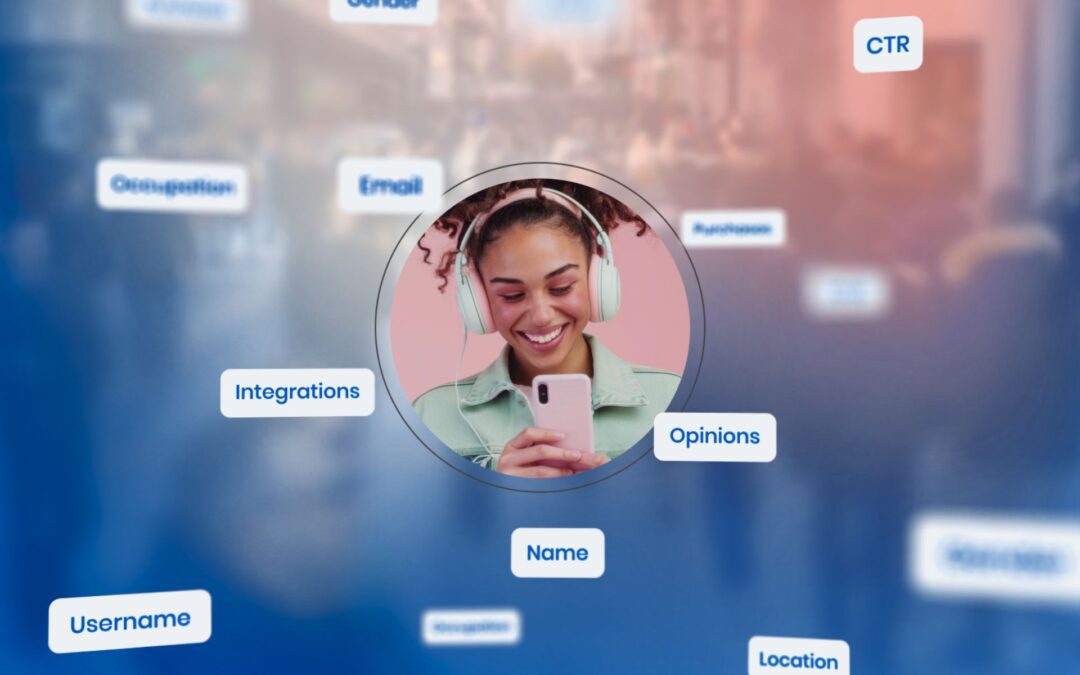
Identity resolution is the process of stitching together multiple data points, such as email addresses, device IDs, loyalty numbers, and cookie data, into one unified customer profile. It is the foundation of any serious data unification strategy.
Without it, the same shopper might appear as three different “customers” across your systems. One record from an in-store purchase, one from a guest checkout online, and one from a newsletter sign-up. Your segmentation becomes unreliable, your suppression lists fail, and your personalisation misfires.
Start by defining a primary identifier, typically an email address or loyalty ID, and use it as the anchor point to merge duplicate records. Deterministic matching (exact data matches) is more reliable than probabilistic matching, but a combination of both gives you the broadest coverage. This single customer view then becomes the data layer everything else is built on.
2: Connect your data sources with API integrations
API integrations are the plumbing that makes data unification possible at scale. Rather than manually exporting and importing data between platforms, APIs allow your tools to share information in real time, keeping customer profiles accurate and up to date.
For retail marketers, this typically means connecting your ecommerce platform, CRM, POS system, and email marketing platform so that an in-store purchase immediately updates a customer’s profile and triggers the right follow-up communication. No lag, no manual work, no missed opportunities.
When evaluating integrations, prioritise bidirectional data flow over one-way syncs. You want data moving in both directions so that engagement signals from your marketing tools feed back into your customer profiles. Pre-built connectors save significant development time, but custom API access is essential for more complex retail tech stacks.
3: Centralise customer data with a CDP
A Customer Data Platform is purpose-built for the data unification challenge. Unlike a CRM, which is designed for sales teams, or a DMP, which focuses on anonymous audience data, a CDP ingests first-party data from all your sources and creates persistent, real-time customer profiles that marketers can actually use.
The practical value for retail is significant. A CDP lets you build segments based on the full customer picture, combining purchase frequency, browsing behaviour, email engagement, and loyalty status into one view. You can trigger campaigns based on real-time signals, apply predictive models like RFM scoring, and deliver next-best-offer recommendations without needing a data science team to run every query.
This is the most scalable scattered customer data solution available to retail marketers today. It removes the dependency on IT for every data request and puts actionable insight directly in the hands of the marketing team. For high-volume retail brands managing millions of customer records, a CDP is where data unification moves from theory to execution.
4: Unify offline and online data with loyalty programmes
Loyalty programmes are one of the most underused tools for bridging the online and offline data gap. When a customer signs up, they give you a persistent identifier that follows them across every touchpoint, from in-store purchases to app activity to email clicks.
The key is to treat the loyalty ID as a data connector, not just a rewards mechanic. Every time a loyalty member makes a purchase, whether in-store or online, that transaction is attached to their profile. Over time, you build a complete picture of their behaviour across channels, something that is almost impossible to achieve without a shared identifier.
To maximise the data value, design your loyalty programme to capture explicit preferences alongside transactional data. Ask members about their favourite categories, preferred communication channels, and shopping motivations. This zero-party data is highly accurate and gives your marketing automation the context it needs to deliver genuinely relevant experiences, not just purchase-based triggers.
5: What does smart segmentation do with unified data?
Smart segmentation is where unified data becomes commercial value. Once your customer profiles are clean, connected, and centralised, segmentation lets you divide your audience into groups that actually behave differently, and communicate with each group in a way that reflects that difference.
In retail, this goes well beyond basic demographics. Unified data lets you segment by purchase recency, category affinity, channel preference, lifecycle stage, and predicted LTV. A customer who buys seasonally needs a different journey than one who shops weekly. A lapsed customer who browsed last week is a different opportunity than one who has not engaged in six months.
The practical result is that your campaigns stop being broadcast messages and start being relevant conversations. Hyper-personalised segments, built on real behavioural data, consistently outperform broad list sends on open rates, conversion, and revenue per send. Smart segmentation is not a nice-to-have. It is the mechanism that turns data unification into measurable marketing performance.
How Deployteq helps with data unification in retail
This is exactly the problem we built our platform to solve. Deployteq brings together everything retail marketers need to unify customer data and activate it across every channel, without the complexity of stitching together multiple tools.
- Unified customer profiles: Our CDP ingests first-party data from all your sources and builds persistent, real-time profiles that give you a true 360-degree single customer view.
- Intelligent modelling: RFM scoring, next-best-offer recommendations, and predictive lifecycle insights are built directly into the platform, so you can act on data without needing a separate analytics team.
- Real-time segmentation: Build hyper-personalised segments based on live behavioural signals and trigger campaigns across email, SMS, WhatsApp, push, and web from a single platform.
- Cross-channel activation: Unified data feeds directly into your campaign journeys, so every touchpoint reflects the full customer picture, not just the last interaction.
- Easy API connectivity: Pre-built integrations and open API access make it straightforward to connect your existing retail tech stack without heavy development resources.
If your current platform is making data unification harder than it should be, it is worth seeing what a purpose-built solution looks like in practice. Book a personalised demo and we will show you exactly how Deployteq handles your specific data challenges.